
はじめに
querie.meでいただいた質問への回答です。質問は以下です。
質問
論文やレポートを書く際に、いつもイントロの書き出しや、各セクション(特にイントロと先行研究)の書き出しを考えるのに非常に苦労します。アウトラインを作ってあっても、どうしても最初の1文~5文ぐらいが書けないと、どうしても前に進めません。逆に、一度書き出してしまえば、スラスラと書くことができます。そのため、どうしても書き出しが締め切り直前となってしまい、「どうにでもなれ!」という感じで一夜漬けのような感じで書き上げてしまいます。そして、修正する段階でも、各論文やレポート、セクションの書き出し”以外”のところだけ修正し、書き出しはどうにもなりません。。。書くのは嫌いではなく、むしろ好きです。ですが、いつも書き出しに苦労してしまいます。一晩で変わるものではないと思いますが、アドバイスや心構えみたいなものがあれば、教えてください🙇🙇
回答
質問ありがとうございます。アウトラインを作ってから書き始めているということ,素晴らしいです。アウトラインを考えることで,論文の各部分の間の一貫性を俯瞰することができるので,とても良いと思います。
結論から言うと,私の答えは次の2つです。
- 最初の1〜5文はオリジナリティ勝負ではなく「型」で書く
- 書き出しから書かない(RQから逆算して後ろから作る)
この2点を押さえるだけで,「アウトラインはあるのに最初の数文だけ書けない」という悩みはかなり軽くなるはずです。以下,順に説明します。
最初の1〜5文は「型」で書く
学術論文のイントロの冒頭(いわゆる漏斗の一番上)には,分野や雑誌ごとにある程度の定石があります。アウトラインがあっても筆が止まるときは,「背景」といった抽象的な見出しを,自分の言葉でゼロから文章化しようとして止まっていることが多いです。
そこでおすすめなのが,「メタ的に分析する」という読み方を,論文全体ではなく「イントロの最初の1パラグラフ」に限定してやることです。自分が好きな論文,書き方がうまいな,読みやすいな,という論文を3〜5本用意して,イントロの最初の1パラグラフだけを横並びにして眺めます。
ポイントは「何が書いてあるか」ではなく,「その数文が何をしているか」です。たとえば,
- 1文目は何を主語にして,どのような時制で書かれているか
- 2〜3文目で,そこからどのように焦点を一段階絞っているか
- どのタイミングで「未解決の問題(ギャップ)」が導入されるか
こういう観点で見ていくと,「最初の5文」が果たすべき機能と,具体的な語彙や構文のパターンが見えてきます。見えてきたら,それを真似して,自分の研究のキーワードを当てはめればよい,ということになります。
あとは,ムーブという概念を知るのも大事ですね。アカデミックライティングというのは,文をゼロから自分で生み出すというよりもむしろ,パターンをうまく組み合わせていくということでもあるので(下に書いた文献やウェブサイトをご参照ください)。
書き出しから書かない(RQから逆算して後ろから作る)
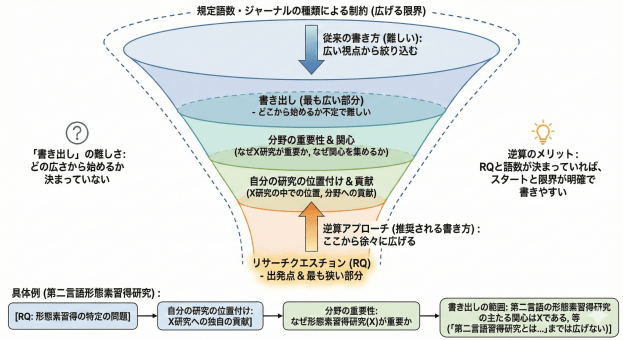
次にもう1つ。漏斗の一番上から書こうとすると難しいのは,どの広さから書き始めるかが決まっていないからです。一方で,論文を書き始める時点で,RQと規定の語数は決まっているはずです。となると,RQが漏斗の一番狭い部分ですから,ここから徐々に広げていくほうがスタート地点が固定されていて書きやすいです。
私が意識しているのは,自分のRQと全体の分量から逆算的にスタート地点を決めることです。論文といっても,例えば学位論文と投稿論文で長さが違いますし,投稿論文でも学術誌によって語数の規定が異なります。自分が全体としてどれくらいの分量の論文を書いていて,各セクションに大体どれくらいの語数を割り当てるのかがまずは一つのポイントです。それが決まれば,funnelの広げ方または狭め方が決まるからです。
例えば,私は第二言語習得研究の中でも文法,特に形態素の習得や処理に興味があってそういう論文を書きます。その時,書き出しは「第二言語習得研究とはこういう学問である」にはおそらくならないですよね。せいぜいが,「第二言語の形態素習得研究の主たる関心はXである」とかでしょう。そこからスタートして,なぜXの研究が分野全体にとって重要なのか,Xが関心を集めているのはなぜか,そして自分の研究はそのXの研究の中でどういう位置付けで,その位置付けの研究は分野全体の研究にどういう貢献をもたらすのか,みたいなことを書いていきます。ここにあげたのはあくまで例で,常に全てがいつも盛り込まれるわけでないです。
バックグラウンド(先行研究)で意識していること
「特にイントロと先行研究」のセクションが書きづらいと感じられているとのことなので,バックグラウンドについても少しだけ書きます。
バックグラウンドのセクションは先行研究のレビューなわけですが,私はいつもサブセクションを作るようにしています。サブセクションの分け方をどう決めるかは,先行研究の学術的な概念の紹介と,過去に行われた先行研究でわかっていること,という感じで私は分けることが多いです。
バックグラウンド全体のイントロ的なパラグラフをおくかどうかも,論文の構成と全体の分量とのバランスで決めているかなと思います。
また,「この論文を理解するためには,これとこれとこれについては読者に知っておいてもらわないといけないよね」ということを絞って書くようにしています。投稿論文の査読でも学位論文の審査でも,審査する人が自分の専門と全く同じ研究をしている人であることは稀です。したがって,自分の研究で重要な概念についてはそれがどういうものなのかをわかってもらわなくてはいけません。もちろんイントロでその概念が出てくるのでその時に説明はするわけですが,より詳しい説明はバックグラウンドのところに持ってくることが私は多いです。
論文の別の箇所に似たような内容が書いてあると,「冗長である」という査読コメントをもらうことがある一方で,何回も繰り返し説明しても,「説明がされていない」と書かれることもあるので難しいところではあります。自分が査読者として論文を読むときは,重要なことは繰り返し書いてもらった方が理解がしやすいので,自分もそういう書き方をしているのかなと思います。
参考になるリソース
ここから先は補助的な話です。型のストックを増やす,あるいは言語化するための材料として,次のようなものが役立ちます。
まずは,日本語で書かれたアカデミック・ライティングの教科書を何冊か読んでみることをおすすめします。どんなものがあるのかわからない場合には,学部や大学院のアカデミック・スキル導入系科目で指定されている教科書か,参考図書にあたられると良いでしょう。多くの大学では,レポートの書き方というのは必須のアカデミックスキルとして大学の初年次で配当されていることが多いです。私の所属先である関西大学外国語学部では,「基礎演習」という科目がそれにあたります。
私の手元にある書籍だと,
- まったく新しいアカデミック・ライティングの教科書(全編を通して読んでもらいたい書籍ですが,一番直結しそうなのは実践編の4章,5章あたりでしょうか)
- 「書けない」悩みに効く論文執筆術(この本自体はもっと「書く」ということをどうストラテジックに進めるかというハック術的なところがありますが,パート15の「パーフェクト・ファースト・センテンス」は質問者の方の悩みにヒントを与えてくれるかもしれません)
- 知へのステップー大学生からのスタディ・スキルズ(第5版が最新のようですが,私の持っている第4版では第8章がレポート執筆の話)
あとは,最近だと生成AIを利用して論文を執筆する方法として,水本先生が作成されたページも参考になります。
さらに,ムーブという概念を使いながら,丁寧に論文執筆の過程を紐解いているのが,『英語科学論文をどう書くか:新しいスタンダード』です。これがおそらく一番,質問者の方の悩みにダイレクトに効く処方箋になると思います。英語で論文を書いていなくても,ロジックは同じなので参考になると思います。
上記書籍にも多くの表現が収録されていますが,私はライティングの授業で必ず,Academic PhrasebankというWebサイトを紹介しています。このサイトにも,論文の様々な場面で有用な表現がまとめられていて,かなり便利です。
おわりに
こういう質問に対して,適切な文献を案内するだけではなく,自分がどのように書いているのか(書いてきたのか)を経験とともに伝えることができるよう,論文を書き続けなければいけないという気持ちになりました。
私に質問したい方は下記URLからどうぞ。
https://querie.me/user/tam07pb915
なにをゆう たむらゆう。
おしまい。





 英語教育0.2